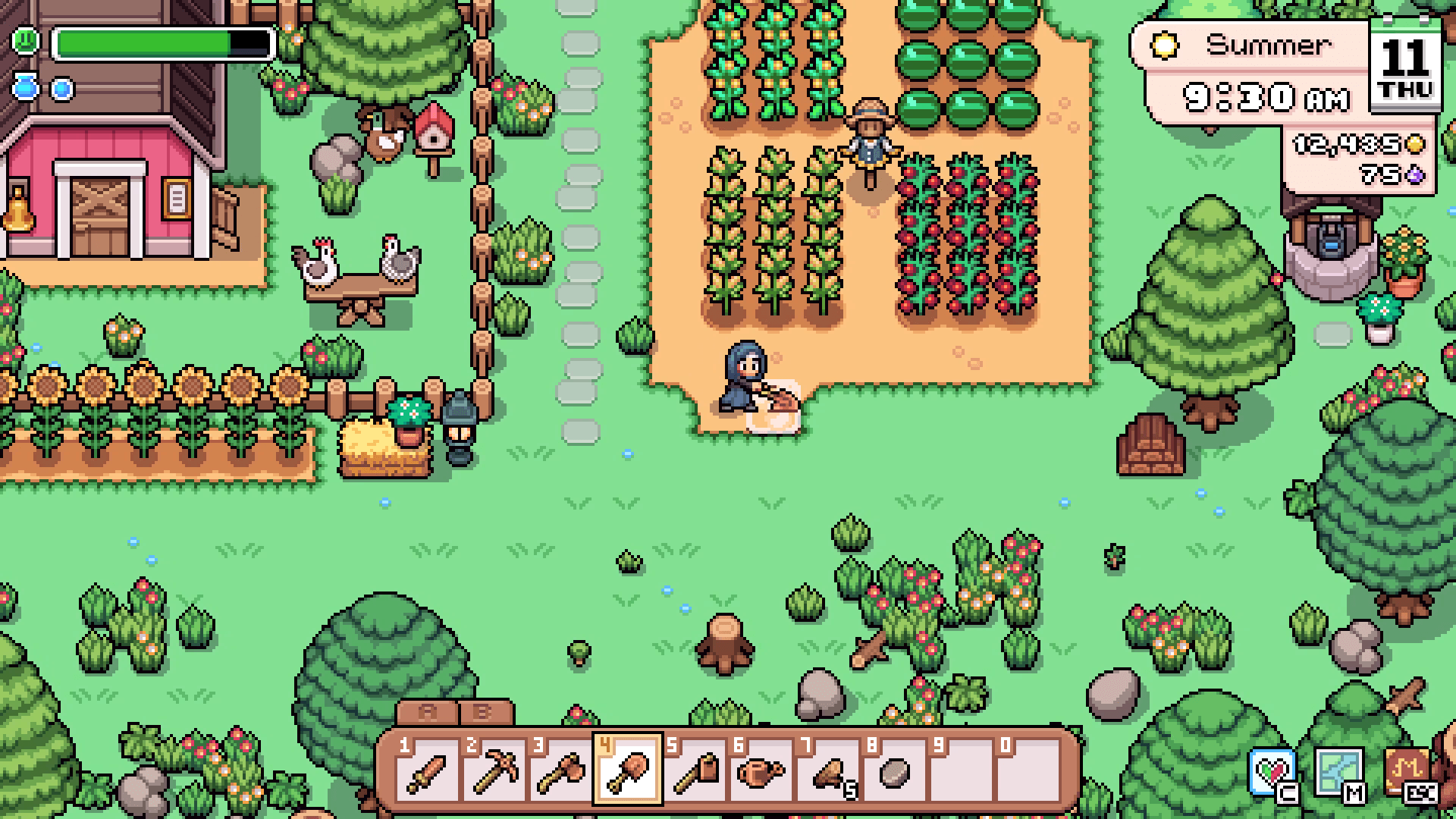
For day-one outdoor planting, peas are the top raw-profit spring crop, tea leads summer, onions lead fall, and snow peas lead winter. Wheat becomes the strongest fall choice when you process it into bread.
Use a full crop cycle
Compare seed cost, growth time, repeat harvests, and sell price together. A crop with a high sell price loses value when it matures too late for another harvest, while repeat crops gain value when planted early.
Seasonal raw-profit picks
- Spring: Peas
- Summer: Tea
- Fall: Onion
- Winter: Snow Peas
Peas, tea, onion, and snow peas use the same 300t seed price in the listed crop table. They follow a five-day initial growth and three-day repeat-harvest pattern. Their listed sell prices are 135t for peas, tea, and onion, and 125t for snow peas.
Fall bread route
Wheat sells for 150t and becomes the strongest fall return when processed into bread. Plant wheat early enough to fit its growth cycle and baking time into the season.
How to compare a crop before planting
Raw sell price is only the first number in a profitable crop route. Check the seed price, the first harvest day, the repeat harvest interval, and the number of days left in the season. A repeat crop planted on day one has more opportunities to pay back its seed cost than the same crop planted late. This is why the seasonal picks above are useful starting points rather than a promise that every field should contain one crop.
Start with a small test block. Plant enough seeds to compare one complete cycle, then record the harvest date and the Tesserae received. Keep the rest of the field available for food, requests, or a crop that supports your current goal. A new save benefits more from a reliable harvest and a full stamina bar than from replacing every useful crop with a theoretical maximum.
Spring planting plan
Peas are the practical spring choice when you want the strongest raw return from the listed day-one options. Put the first block close to your watering route, and leave a chest at the edge for seeds and harvested produce. If you are also gathering materials or fishing, use a field size you can water without spending the whole morning. A smaller healthy field earns more than a larger field that is left dry.
Summer planting plan
Tea leads the listed summer comparison. Use the same five-day first-growth and three-day repeat-harvest pattern when you estimate its return. Keep a few tiles open for a request crop or cooking ingredient, because a profitable field does not replace every other source of value. When a crop is ready, harvest before starting a long mine or fishing trip so the harvest is not left in the ground overnight.
Fall and winter decisions
Onions are the listed raw-profit pick for fall, while snow peas lead winter. Fall also gives wheat a special processing route: bake the harvest into bread when you have the time and ingredients to complete the recipe. Winter fields are easier to manage when they sit near storage and the shipping bin, because travel time matters more when daylight is short and you are combining farming with town errands.
Improve the route instead of chasing one number
Profit improves when the field is easy to work. Put a Water Sprite Statue at the center of the block it serves, keep seeds and fertilizer in a nearby chest, and connect the plot to the path you already use for animals or the farmhouse. Use the farm layout guide when you are ready to expand. For a second opinion on a crop table, compare the values in the complete crop reference listed in Further reading with your current save and season.
Questions players usually ask
Is the most expensive seed always the most profitable?
No. Profit depends on the full cycle, including how many harvests fit before the season ends. Compare seed cost, growth time, repeat harvests, and sell value together.
Should I plant only the recommended crop?
No. Keep room for request items, cooking ingredients, and a field size you can care for every day. The recommendation is a strong baseline for raw profit, not a requirement for a successful farm.
When should I process wheat?
Use the bread route when you have enough time and ingredients to finish baking before the season or your next goal demands the slot. Otherwise, selling or storing the wheat keeps the route simple.
The best seasonal plan is the one you can repeat. Check the crop table before buying seeds, reserve a few tiles for requests, and review the route after each harvest. That routine keeps your Tesserae growing without turning the farm into a chore.
Video walkthrough
The Best Crops in Fields of Mistria 1.0 - Every Season Ranked by ComfyQuesting compares the seasonal crop routes.
Final planting check
Before buying a full field of seeds, count the days left in the season, reserve tiles for requests, and place storage near the watering route. Compare the current crop table with your save, then test one small block. A repeatable harvest and an intact stamina routine are better measures of profit than a single headline number.
Profit styles for different saves
There is no single field shape that fits every farmer. The seasonal picks answer the narrow question “which listed crop returns the most raw Tesserae when planted on day one?” Your wider plan should answer a different question: what can this save harvest, process, and carry before the next deadline? Choosing a profit style makes the crop table easier to use and keeps the farm useful for requests, cooking, and exploration.
The steady raw-profit field
Use peas, tea, onion, or snow peas when you want a simple field with predictable repeat harvests. Plant the block early, water it from the same route each morning, and harvest every ready tile before leaving for town. Keep one row open for a request crop so a surprise board task does not force you to uproot a profitable block. This style suits a new save because it turns a small, healthy field into regular income without requiring a large processing chain.
The processing-focused field
Wheat is the fall option that changes the calculation because the harvest can become bread. This route is worthwhile only when the rest of the save can support it: you need time to process the crop and enough cooking capacity to finish the recipe. Plant a test patch first, note the harvest date, and check whether baking fits around animal care and the mine. If the processing step would delay a more important goal, keep the wheat as a flexible ingredient or sell it rather than forcing a longer route.
The request-and-cooking field
Profit is not only a sell screen number. Crops can fill town requests, become gifts, or supply a recipe that saves a trip to a shop. Reserve a small mixed block for those jobs before you maximize the remaining tiles. A few peas for a request, an onion for a soup, or a snow pea for a seasonal dish can be more valuable to the day’s plan than another row that waits in the shipping bin. Label the chest beside this block so the useful reserve does not disappear into general storage.
The low-stamina field
When stamina or time is tight, shrink the field before changing the crop. A smaller plot that you can water and harvest every day produces a dependable return; a large plot that leaves crops dry creates lost days and extra travel. Put the Water Sprite Statue at the center of the section it serves, keep seeds at the near edge, and connect that edge to the route you already walk for animals or the shipping bin. Recheck the size after an upgrade, because a faster route may let you expand without adding another morning chore.
A repeatable comparison routine
At the start of each season, write down the days remaining, seed cost, first harvest day, repeat interval, and expected use for every candidate. Compare one small test block rather than committing the entire farm. At harvest, record the actual Tesserae and whether the crop supported a request or recipe. Carry the result into the next season’s plan. This routine turns the crop table into a decision tool: the best crop is the one that matches your available days, processing time, storage, and current objective.