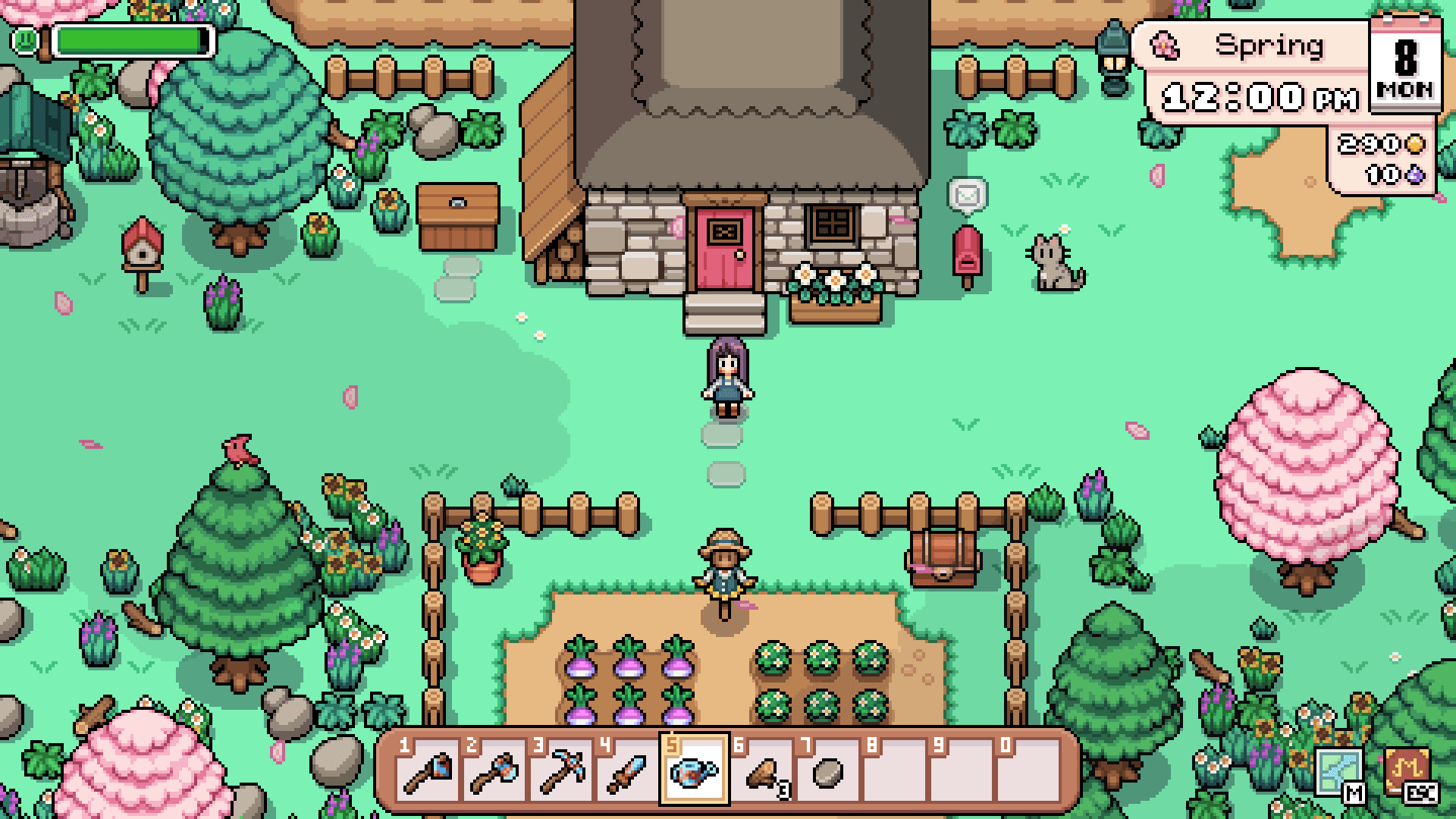
Fields of Mistria animals are divided by housing: coops hold small animals, while barns hold large animals. Choose the building size for your target capacity first, then buy the animal whose products and care routine suit your farm.
Choose a coop or barn
Coop
For Chicken, Duck, Rabbit, and Capybara.
| Size | Capacity | Cost | Materials | Unlock | Incubators |
|---|---|---|---|---|---|
| Small | 4 | 1,500 Tesserae | 75 Wood · 50 Stone | Available from the Carpenter | 1 |
| Medium | 8 | 3,000 Tesserae | 100 Wood · 75 Stone | Ranching Level 20 | 2 |
| Large | 12 | 6,000 Tesserae | 125 Wood · 100 Stone | Ranching Level 40 | 4 |
Barn
For Cow, Horse, Sheep, and Alpaca.
| Size | Capacity | Cost | Materials | Unlock | Incubators |
|---|---|---|---|---|---|
| Small | 4 | 2,000 Tesserae | 100 Wood · 75 Stone | Available from the Carpenter | — |
| Medium | 8 | 4,000 Tesserae | 125 Wood · 100 Stone | Ranching Level 20 | — |
| Large | 12 | 8,000 Tesserae | 150 Wood · 125 Stone | Ranching Level 40 | — |
Animal directory
Open an animal profile for its purchase requirement, feed, maturity time, product cycle, breeding details, and every acquirable color.
Care and heart progress
Feed
Barn animals eat hay and upgraded hay. Coop animals eat Grass Seed and upgraded small-animal feed.
Hearts
Feeding, petting, and letting an animal outside each add 5 heart points. Leaving an animal outside removes 5 heart points.
Production
At 2, 4, 6, 8, and 10 hearts, animals progress from one normal product to two normal products and then golden production.
Breeding and production
Animals can breed from 2 hearts with their matching Heart-Shaped Treat. Chickens and ducks use egg incubation; cows, horses, sheep, alpacas, rabbits, and capybaras use gestation. Production improves at 2, 4, 6, 8, and 10 hearts, so regular care makes each animal more productive over time.
Choose animals for the farm you actually run
Start with the housing you already own. Coop animals are the small-animal route, while barn animals need barn capacity and a different feed routine. Compare the purchase price, feed, maturity time, product cadence, and breeding requirement in the profile before spending Tesserae. An animal that fits your daily route is more useful than one that looks profitable on paper but leaves the building uncared for.
Upgrade capacity in stages
Small, medium, and large housing sizes provide 4, 8, and 12 spaces. Plan the next capacity before buying the last animal for a smaller building, and leave service space around the door so a later rebuild does not block your route. Transfer animals before moving a building, and check the current upgrade cost in the housing reference before you commit wood, stone, or Tesserae.
Make care part of the morning loop
Feed, pet, and let each animal outside when the weather and route allow. Collect products before leaving the farm, then store them by animal type so requests and cooking do not consume the whole stockpile. The heart reference above explains the 5-point changes tied to feeding, petting, and outside time. A short consistent loop builds more progress than an occasional visit followed by a missed feeding day.
Plan breeding and color goals
Breeding starts at 2 hearts with the matching Heart-Shaped Treat. Chickens and ducks use incubation, while cows, horses, sheep, alpacas, rabbits, and capybaras use gestation. Decide whether your goal is a new product, a color variant, or a full collection before using a treat. Keep one spare housing slot available and check the profile's shop and breeding color lists so you know what the next pairing can produce.
Read the product tables correctly
Each profile lists the normal and golden production conditions, cadence, and any special requirement. Use those rows to decide which animal belongs near your shipping chest and which one supports a cooking or request route. At 8 hearts, the listed golden product can appear; at 10 hearts, production becomes one golden product. Keep the exact row visible while planning rather than relying on memory from an older version.
Which animal should I buy first?
Choose the animal whose housing, feed, price, and product fit your current farm capacity. Open the individual profiles and compare the complete overview before buying.
How do I improve animal production?
Feed and pet animals consistently, let them outside when appropriate, and build hearts through the care routine. Production improves at the listed heart milestones.
Can I move a coop or barn?
Yes, but transfer the animals first and check the building's current contents before rebuilding. Leave a clear service lane in your layout for future upgrades.
Plan a complete ranching day
Begin with feeding and petting, collect the available products, and check which animals can go outside. Then review the request log and place the products you are keeping into labeled storage. If you are breeding, confirm the Heart-Shaped Treat and spare capacity before starting. If you are upgrading, reserve the wood, stone, and Tesserae first. This order prevents a rushed purchase from blocking the care routine that builds hearts.
Use the individual profile pages when a decision depends on one species. The directory gives the broad housing split, while each profile lists price, availability, feed, maturity, breeding, products, and colors. Compare those fields with the current animal reference before making a large purchase, and update your own plan when a patch changes a value.
The directory is also a planning tool for mixed farms. Keep coop and barn routes separate when that saves a walk, place product storage near the shipping bin, and reserve space for the next housing tier. Review the tables at the start of each season so feed, breeding, and request goals stay aligned with the animals you actually keep.
Video guide
Fields of Mistra Animal BREEDING GUIDE + Color Chart & QUIZ! by Buckeye Bunny is a visual companion for breeding and color progression. Use the tables above for the exact purchase, housing, and product details.
Route checkpoint
Before buying another animal, check housing capacity, feed, and the next request that may use its product. Leave a clear service lane and one spare slot for breeding. Review the individual profile after a patch so your care and production plan uses the current values.